
From '96 to '28: the U.S. Leads the Way for Women's Football (Soccer)
By: LA28 Staff
When athletes take the pitch across LA28’s seven Football (Soccer) venues, the Women’s Olympic Football (Soccer) Tournament will feature a record 16 teams—marking the first time in the history of the Games that more women’s teams will be featured than men’s.
This feat was achieved thanks to a decades-long fight for equality on and off the field, including the Olympic debut of women’s Football (Soccer) at the Olympic Games 30 years ago at the Atlanta 1996 Games.
The long-awaited inclusion of this sport within the Olympic program coupled with the U.S. Women’s Team’s gold medal win on home soil became a watershed moment for the country and the world to recognize women’s Football (Soccer) as a premier global sport.
The first major international stage for women’s Football (Soccer) occurred at the inaugural FIFA Women's World Cup in 1991. The U.S. Women’s Team won the tournament with many of the players on the squad, including Mia Hamm, Brandi Chastain and Michelle Akers, going on to represent their country once more at the Atlanta Games.
In 1993, the International Olympic Committee finally approved women’s Football (Soccer) to be added to the Olympic Program.
Despite the sport’s addition to the Olympic Games, players still had to fight for equality off the pitch with the U.S. Soccer Federation (USSF). In 1995, players on the Olympic team including Akers, Hamm and Kristine Lilly were locked out of a training camp prior to the Olympics because they had a disagreement with how the USSF was awarding bonuses—the women’s team would only get a bonus for a gold medal while the men's team were getting bonuses per win. The women’s players wanted bonuses for other medals as well. While this dispute was settled before the Games, it served as a stark reminder of the ongoing fight for gender equity in sports.
This collective fight for respect only unified the squad, fueling their determination as Coach Tony DiCicco assembled the powerhouse roster destined for Atlanta. Thanks to many of the team members' history of playing together throughout the ‘90s, including as World Cup champions in ‘91, the chemistry between the athletes was palpable on and off the field.
Building on his previous experience as the U.S. women’s goalkeeper coach in ‘91, Coach DiCicco was named head coach in 1994. His technical abilities and mentoring style of leadership quickly forged a winning record and a cohesive, powerhouse roster that was ready to take on the other seven countries (Brazil, China, Denmark, Germany, Japan, Norway and Sweden) included in the inaugural Olympic Women’s Football (Soccer) Tournament.
The Tournament kicked off on July 21, 1996, pitting Germany against Japan in the group stage. Germany won the game 3-2, with midfielder Bettina Wiegmann scoring the first goal in women’s Olympic soccer.
The U.S. played later that day against Denmark in Orlando with midfielder Tisha Venturini scoring the first goal in U.S. women’s Olympic Football (Soccer) history, with the team eventually winning 3-0.
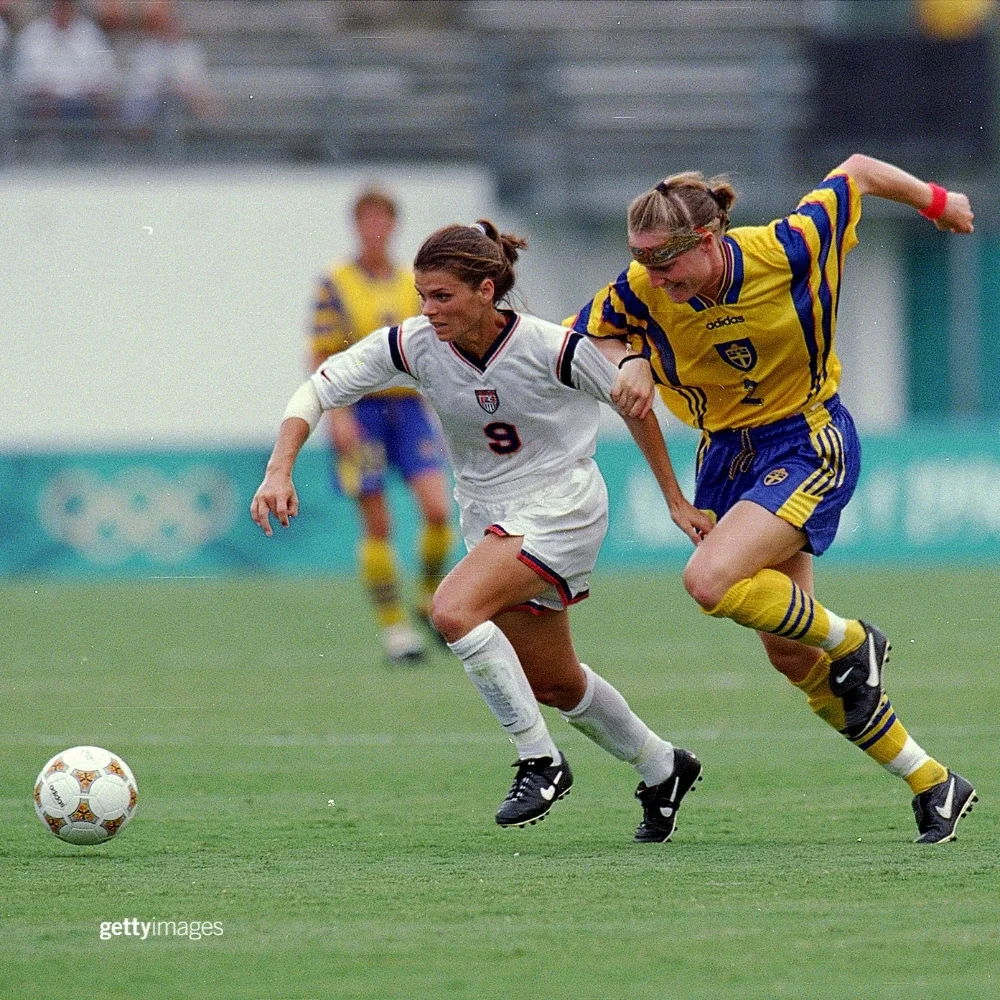
The U.S. continued their undefeated tournament streak winning a second group match against Sweden with a score of 2-1 and then drew 1-1 against China in their final group match.
In the Semifinals the knockout round, the squad defeated Norway 2-1.
Finally, in front of a crowd of 76,489 fans (the largest crowd for a women’s sporting event at the time) at the University of Georgia’s Sanford Stadium, the U.S. Women’s Team won a 2-1 gold medal victory against China. Shannon MacMillan scored the first goal in the 17th minute with Tiffeny Milbrett clinching the gold-medal-winning goal in the 68th minute.
Once the final whistle blew, the U.S. Women's Team became the first Women’s Football (Soccer) Olympic Champions.
The magic of that 1996 gold medal laid a strong foundation for the sport’s global captivation, paving the way for landmark moments like the legendary 1999 Women’s World Cup final at the Rose Bowl Stadium.
This spark encouraged football federations across the world to further develop their own Women’s National Teams and professional leagues.
Decades later, the legacy of the ‘96 Games and the gold medal squad continues through LA28’s efforts for parity and equality in women’s sports.
As the international Football (Soccer) community prepares to reunite on U.S. soil, the significant women’s Football (Soccer) milestones that started in Atlanta will continue in Los Angeles—not just as a competition, but as a joyful, global celebration of how far women's sports have come.
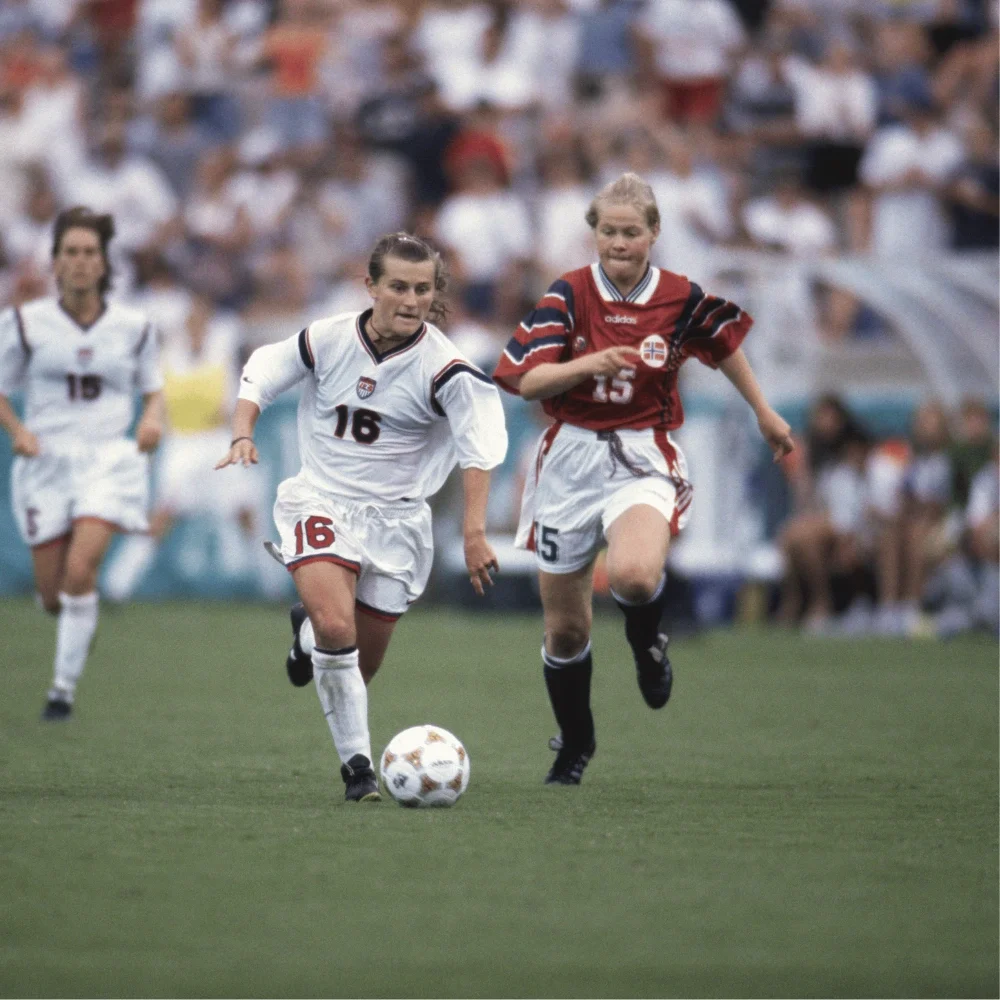
Women’s 1996 Olympic Gold Medal Roster
Athletes: Michelle Akers, Brandi Chastain, Joy Fawcett, Julie Foudy, Carin Jennings-Gabarra, Mia Hamm, Mary Harvey, Kristine Lilly, Shannon MacMillan, Tiffeny Milbrett, Carla Overbeck, Cindy Parlow, Tiffany Roberts, Briana Scurry, Tisha Venturini, Staci Wilson
Coach: Tony DiCicco
If you want to watch the next generation of Olympic Football (Soccer) athletes in person, check out the venues where the LA28 Women’s Olympic Football (Soccer) Tournament is taking place and learn more about how to get tickets.